
Key Points
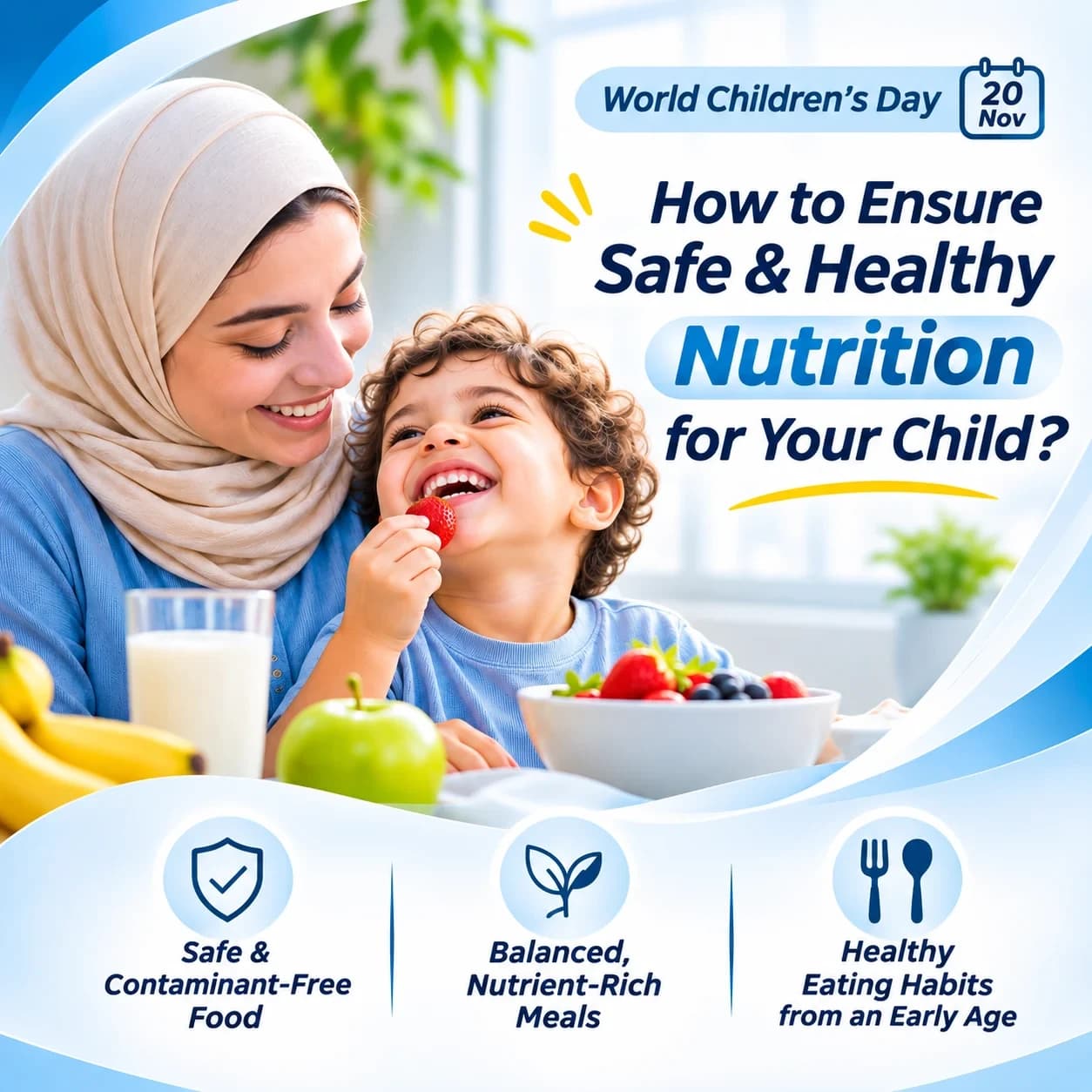
- 01World Children's Day (November 20): An annual occasion, also known as Children's Day, in which Enfa Star participates to promote health awareness and ensure proper nutrition for children during their early years.
- 02A Nutritional Perspective on World Children's Day: This guide highlights the World Health Organization's recommendations for exclusive breastfeeding during the first 6 months, followed by the gradual introduction of complementary foods until the age of 2 years or beyond.
- 03Choosing and Preparing Food Safely on World Children's Day: The importance of reading product labels according to age, preparing powdered infant formula with water at a temperature of at least 70°C, and following proper storage guidelines.
- 04Protecting Children's Food in Kuwait's Climate: Practical tips for mothers on providing safe drinking water and keeping milk and food away from high temperatures to ensure children's safety.
01World Children's Day (November 20): An annual occasion, also known …View all key pointsShow less
In celebration of World Children’s Day, observed every year on November 20, Enfastar is highlighting the importance of children’s health and proper nutrition, recognizing the essential role of healthy eating habits during the early years of life.
This global occasion serves as a reminder of the importance of providing children with appropriate healthcare and nutrition, while helping parents understand the basics of food safety, how to choose age-appropriate products, and how to prepare and store food correctly.
Many mothers look for reliable information to help them make informed decisions about their children’s nutrition, especially during the first years, when nutritional needs change as children grow and develop.
As part of this awareness initiative, Enfastar presents this guide to help mothers understand the different stages of infant and child feeding, learn essential food safety practices, and choose suitable products according to their child’s age and the manufacturer's instructions.
World Children’s Day and the Importance of Healthy Nutrition in Early Childhood
World Children’s Day is more than an occasion for celebrations and awareness activities. It is also an opportunity to remind families of the importance of creating a healthy and safe environment that supports children’s growth and development.
Proper nutrition is one of the foundations of child health. Every child needs a diet that is appropriate for their age and nutritional requirements, with attention to food variety, quality, and safe preparation.
The World Health Organization (WHO) and UNICEF recommend that breastfeeding should begin within the first hour after birth, whenever possible. They recommend exclusive breastfeeding for the first six months, followed by the introduction of appropriate complementary foods while breastfeeding continues until the age of two years or beyond.
How to Choose the Right Nutrition for Your Child at Every Age
Children’s nutritional needs change as they grow. Understanding the main feeding recommendations for each stage can help parents make appropriate choices.
1. Feeding Newborns from Birth to 6 Months
During the first six months of life, exclusive breastfeeding is the recommended feeding approach. According to the World Health Organization, breast milk provides the nutrients infants need during this stage.
When infant formula is needed, parents should choose an age-appropriate product with guidance from a healthcare professional and follow the preparation and storage instructions provided on the packaging.
Choosing an infant formula should not depend on the brand name alone. Mothers should consider the product’s intended age group, nutritional information, preparation instructions, and the individual needs of their baby.
2. Feeding Children from 6 to 12 Months
At around six months, babies begin the complementary feeding stage. Suitable foods are gradually introduced alongside continued breastfeeding or infant formula, depending on the baby’s feeding needs.
Some suitable food options, prepared in a texture appropriate for the baby’s development, include:
Cooked and mashed vegetables.
Soft and mashed fruits.
Iron-fortified infant cereals.
Thoroughly cooked and finely mashed meat and chicken.
Well-cooked and mashed legumes.
Food variety and texture should increase gradually as the baby develops the ability to chew and swallow. Parents should also pay attention to signs of hunger and fullness rather than forcing the baby to finish a meal.
3. Feeding Children from 1 to 3 Years
During this stage, children gradually become more able to eat suitable family foods. Offering a variety of nutritious options helps establish healthy eating habits.
Try to include:
A variety of fruits and vegetables.
Protein sources such as eggs, meat, and legumes.
Whole grains and other grain products.
Age-appropriate dairy products.
Drinking water regularly.
It is also important to limit foods and drinks high in added sugar and salt. Avoid pressuring children to eat, and make sure foods are prepared in suitable sizes and textures to reduce choking risks.
A Guide to Your Child’s Feeding Stages from Birth to 3 Years
Children’s nutritional needs and feeding abilities develop gradually. The following age groups provide a general guide to suitable feeding practices:
Birth to 6 months: Exclusive breastfeeding is the main recommendation. Infants generally do not need additional foods or drinks during this stage.
6 to 8 months: Introduce soft, mashed complementary foods, such as vegetables, fruits, iron-rich cereals, and mashed meat.
9 to 11 months: Gradually increase food variety and offer thicker textures, mashed foods, and small, soft pieces that match the baby’s chewing and swallowing abilities.
12 to 23 months: Offer a varied diet of suitable family foods, including vegetables, fruits, protein sources, grains, and appropriate dairy products.
2 to 3 years: Encourage a balanced and varied diet, offer water regularly, and limit foods and drinks high in added sugar and salt.
These stages are general guidelines. Food texture, portion size, and preparation methods should always be adapted to the child’s development and ability to chew and swallow safely.
How to Choose Children’s Nutrition Products Carefully
Choosing products for infants and young children requires attention to more than the packaging or brand name. Parents should check important details to make sure a product is suitable for their child.
First: Check the age recommendation
Read the age range stated on the packaging and make sure the product is intended for your child’s current stage of development.
Second: Read the ingredients and nutritional information
Review the ingredient list, nutritional information, warnings, and preparation instructions. Avoid relying on marketing claims alone when making feeding decisions.
Third: Check product safety
Make sure the packaging is intact, check the expiration or use-by date, and follow the recommended storage conditions. Choose products from reliable sources.
Fourth: Follow preparation instructions
If a product requires preparation, follow the instructions on its packaging carefully. This is particularly important when measuring water, preparing infant formula, and storing prepared feeds.
Fifth: Consult a healthcare professional when needed
If your child has a food allergy, medical condition, or special nutritional needs, consult a pediatrician before changing their diet or choosing a specialized nutrition product.
Guidelines for Safely Preparing and Storing Infant Formula
Powdered infant formula requires special care during preparation because it is not sterile and may contain harmful germs under certain conditions.
To reduce contamination risks, follow these important precautions:
Wash your hands thoroughly with soap and water before preparing a feed.
Clean and sterilize feeding bottles and preparation equipment according to appropriate infant-care guidance.
Use water from a safe source and follow the preparation guidance recommended by your local health authority and the formula manufacturer. WHO guidance recommends mixing powdered formula with water at a temperature of at least 70°C to reduce the risk of harmful bacteria. Some health authorities provide different preparation instructions for most healthy infants and additional precautions for babies at higher risk.
Measure the exact amount of water stated on the product label, then add the specified number of scoops. Do not change the recommended proportions.
Never dilute formula with extra water or make it more concentrated than instructed. Incorrect proportions can affect your baby’s nutrition and health.
Prepare each feed as close as possible to the time it will be used.
Use prepared formula within two hours of preparation if it has been kept at room temperature. Once feeding begins, discard any remaining formula after one hour.
If prepared formula will not be used within two hours, refrigerate it immediately and use it within 24 hours, following the applicable storage guidance.
Discard any formula left in the bottle after feeding. Do not save it for another feed, because contact with the baby’s saliva can allow bacteria to grow.
Never heat infant formula in a microwave. Follow safe warming instructions if warming is needed.
Important note: Preparation and storage recommendations may differ depending on the type of formula, the product instructions, and the baby’s health. Ready-to-feed liquid formula does not require the same mixing steps as powdered formula. Babies younger than two months, babies born prematurely, and infants with weakened immune systems need additional precautions. Sterile ready-to-feed liquid formula is generally the safest formula option for these higher-risk infants when formula feeding is necessary, in consultation with a healthcare professional.
Child Nutrition in Kuwait: Important Tips for Mothers
Caring for children’s nutrition in Kuwait also means paying attention to everyday conditions that can affect food safety, particularly during periods of high temperatures.
Here are some useful practices:
Provide safe drinking water once your child begins complementary feeding.
Avoid leaving prepared food or infant formula at high temperatures.
Follow the storage instructions printed on food products.
Keep feeding and food preparation equipment clean.
Choose products from reliable sources.
Avoid foods that may cause choking, such as whole nuts and hard or round pieces of food.
Monitor your child’s growth and nutritional needs with a pediatrician.
Remember that high temperatures make proper food storage and safe food handling especially important throughout the year.
Frequently Asked Questions About Healthy Child Nutrition
When should a baby start eating solid foods?
The World Health Organization recommends introducing complementary foods at around six months of age, while continuing breastfeeding. The first foods should have a soft texture that matches the baby’s developmental abilities.
What are the most important elements of healthy nutrition for children?
A balanced diet includes a variety of vegetables, fruits, grains, protein sources, and iron-rich foods. The specific foods and quantities should be appropriate for the child’s age and nutritional needs.
How can I make sure children’s nutrition products are safe?
Check the expiration date, packaging condition, ingredients, age recommendation, and storage and preparation instructions. Purchase products from reliable sources and consult a healthcare professional if your child has special nutritional needs.
Can breastfeeding continue after a child turns one?
Yes. The World Health Organization recommends continuing breastfeeding until the age of two years or beyond, alongside appropriate complementary foods.